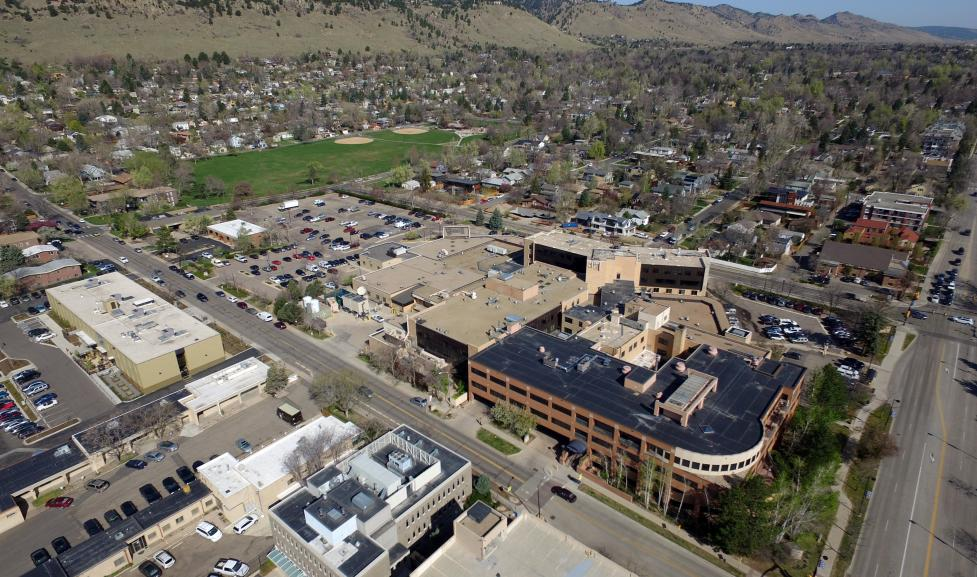
Welcome to the Open Boulder website! On the right, you see our mission and values. By scrolling down on the left, you will see the issues we have developed or are following.
To join our newsletter list, please click here.

Open Boulder Endorses Five Candidates for Boulder City Council
Slate reflects Open Boulder’s priorities: good governance, financial responsibility and transparency, community safety and emergency preparedness, and community vibrancy and affordability
BOULDER, Colo. — September 14, 2026 — Open Boulder, a nonpartisan organization dedicated to pragmatic, results-oriented local governance, today announced its endorsement of five candidates for Boulder City Council: Jill Grano, Ryan Jamieson, Tara Winer, Tina Marquis, and Benita Duran.
Open Boulder has set up an Unofficial Candidates Committee (UCC) to support the five candidates above. Donations are limited to $100/person.
City Council approved the bond referral of Ordinance 8758— sending it to voters November 3, 2026. Council also approved companion charter amendment Ordinance 8762 that raises the city’s legal debt limit — an estimated jump from a $152.7M limit to $1.55 billion. Learn more before you vote!
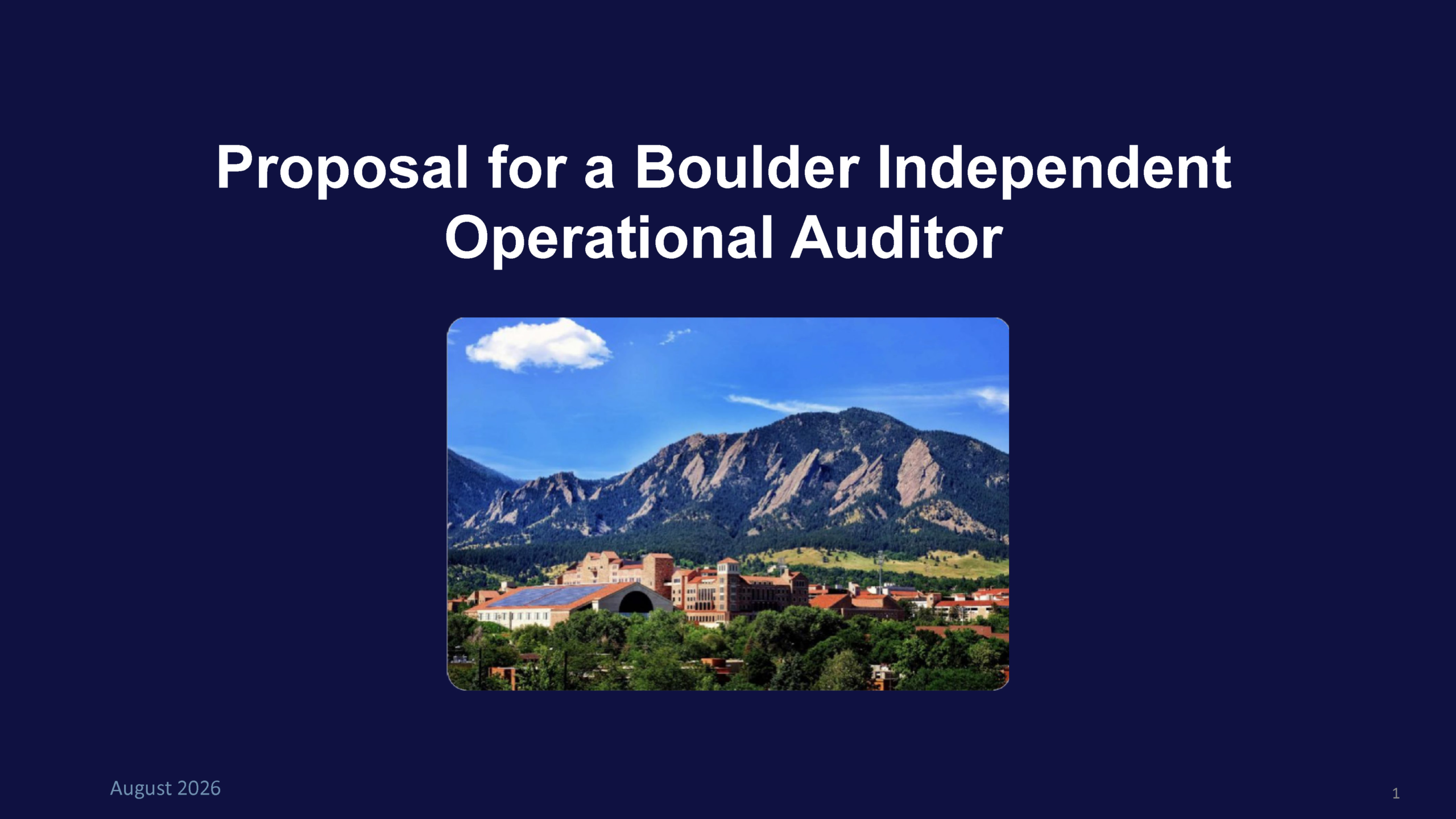
A performance auditor asks the question a financial audit never does: is this program actually working? By evaluating whether public spending delivers the results taxpayers were promised, independent performance audits have uncovered everything from six-figure inefficiencies to nine-figure oversights — often returning several dollars in savings for every dollar invested.
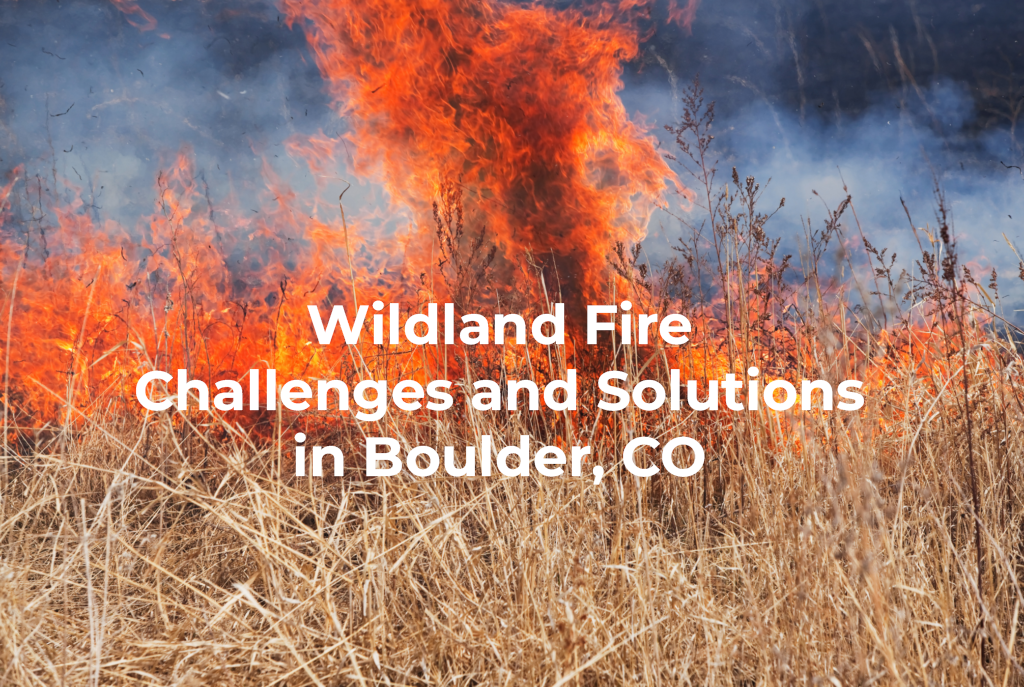
According to the U.S. Forest Service’s Wildfire Risk to Communities tool, Boulder ranks in the top 3 percent of communities whose lives, properties, and community assets are at risk due to wildfire. Boulder’s existential risk is that a fast-moving wildfire on its western edge could become a wildfire-initiated community conflagration (WICC). The central vulnerability is not the initial wildfire alone, but the high likelihood of the fire to ignite homes and then spread from structure to structure faster than evacuation and suppression systems can respond, leading to large scale loss of properties and lives.
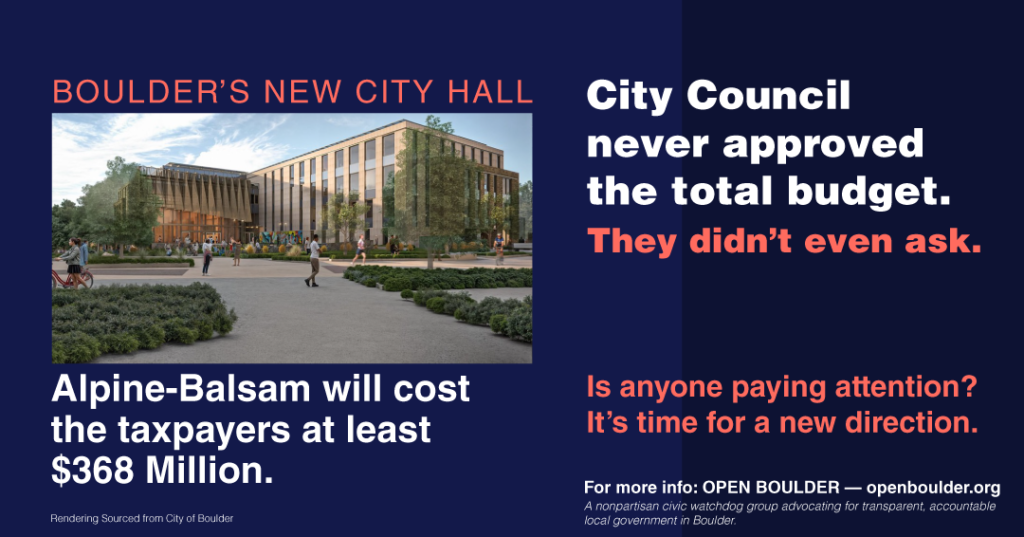
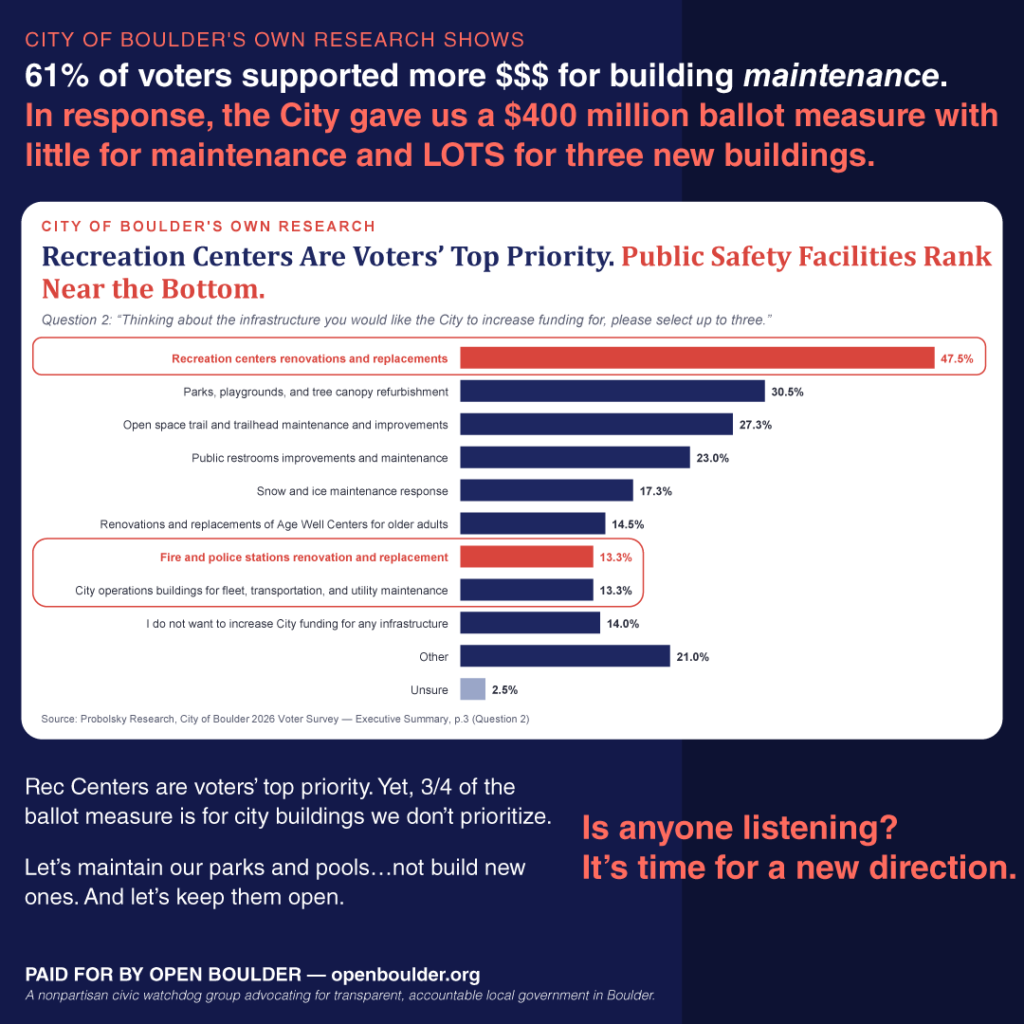
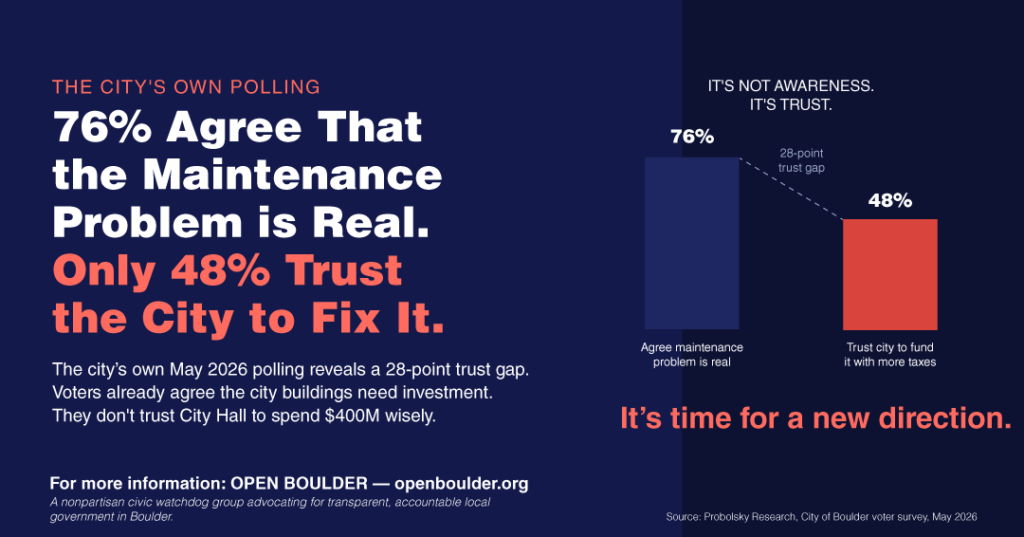
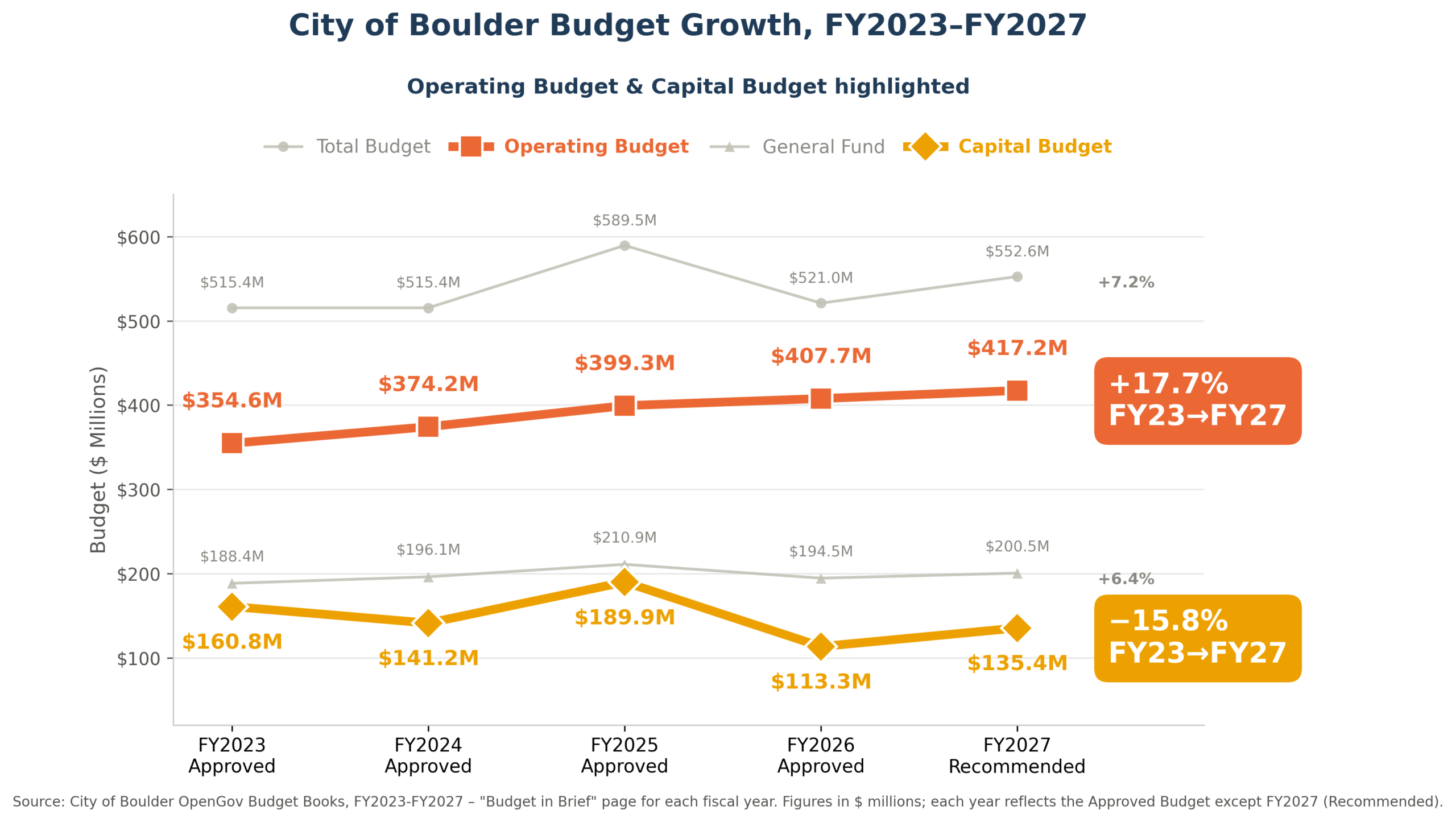
View our social media ads. Click on image for larger view.